Archival photography · Sources & licences
Sony Ericsson was formed in 2001, when mobile phones were expanding from communication tools into cameras, music players and internet devices. Its strongest designs did not hide those new roles. They made a feature visible through colour, controls and product naming.
Small devices with a clear hierarchy
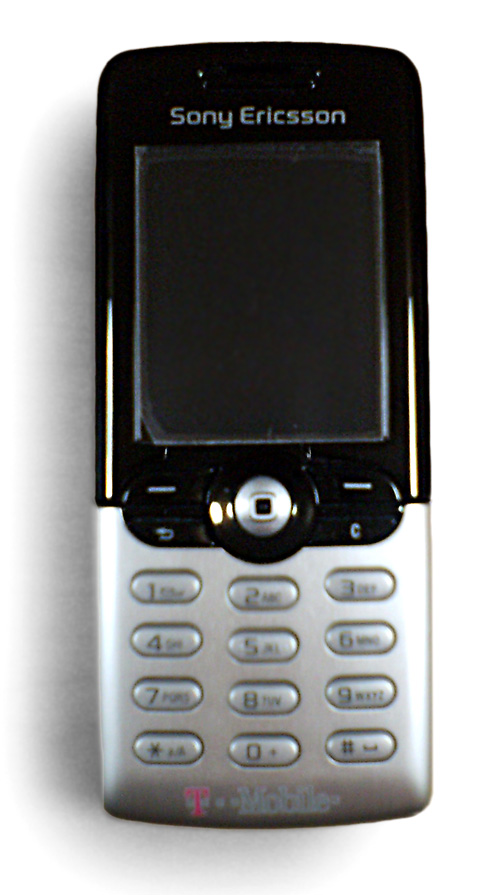
The T68i helped establish an early visual language: compact proportions, a colour screen, a joystick for navigation and a two-tone body that separated interaction areas. The joystick condensed directional movement and selection into one small control, fitting increasingly complex menus into a phone still designed for one hand.
This compactness mattered. Designers had to balance a readable display, twelve number keys, soft keys, navigation and call controls on a face much smaller than today’s screens. Grouping and tactile distinction did the work that software animation often does now.
Walkman phones made music physical
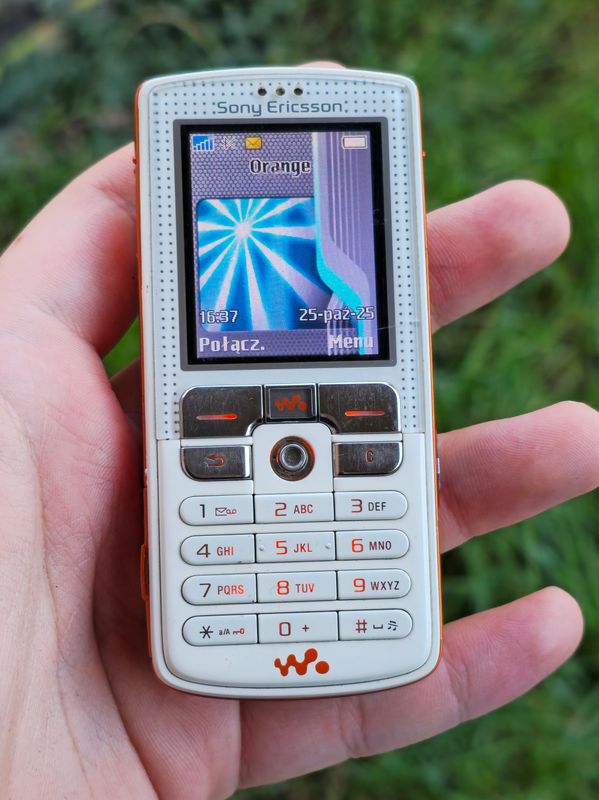
The W800i, released in 2005, paired the Walkman name with orange accents and dedicated playback cues. The colour was more than decoration: it marked the phone’s music identity across hardware, packaging and interface. A user could understand the product’s promise at a glance.
Dedicated music controls also reduced friction. Starting playback did not require opening a general app grid and searching for an icon. The control existed because music was treated as a primary mode of the object.
Camera phones borrowed from cameras
The K750i, also from 2005, demonstrated a parallel idea. Its camera could be activated with a physical shutter key, and the phone encouraged a landscape grip familiar from compact cameras. Later Cyber-shot models made the connection even more explicit through lens covers, camera-style graphics and prominent imaging controls.
A feature became memorable when the hardware told your hand how to use it.
One brand, multiple personalities
Walkman and Cyber-shot created understandable sub-families. They let Sony Ericsson reuse broader design principles while giving people a reason to choose one device over another. The music fan and the camera enthusiast were not presented with the same anonymous rectangle.
This is why many Sony Ericsson phones remain vivid in memory. Their identity came from a relationship between purpose and form: orange for music, a shutter key for photography, a joystick for dense menus and compact bodies shaped around limited components.